UK CV Format: Template, Length and What to Include (2026)
If you are applying for jobs in the United Kingdom, there are a few conventions that differ from other countries. Getting the format right helps recruiters read your CV quickly and shows you understand the local market.
Here is everything you need to know about the UK CV format.
How long should a UK CV be?
Two pages of A4 is the standard for most roles. One page is fine for early-career candidates, and three pages is acceptable for very senior or technical roles. Do not pad a short CV just to fill two pages.
The sections, in order
- Contact details – name, phone, email, location (city is enough). Add a LinkedIn URL if you have one.
- Personal statement – two to three lines summarising who you are and what you offer.
- Work experience – reverse chronological order, with your achievements.
- Education – qualifications with dates, starting with the most recent.
- Skills – a short list of relevant skills.
Optional: a short "Interests" section, but only if it adds something relevant.
What to leave out of a UK CV
Unlike some other countries, in the UK you should usually not include:
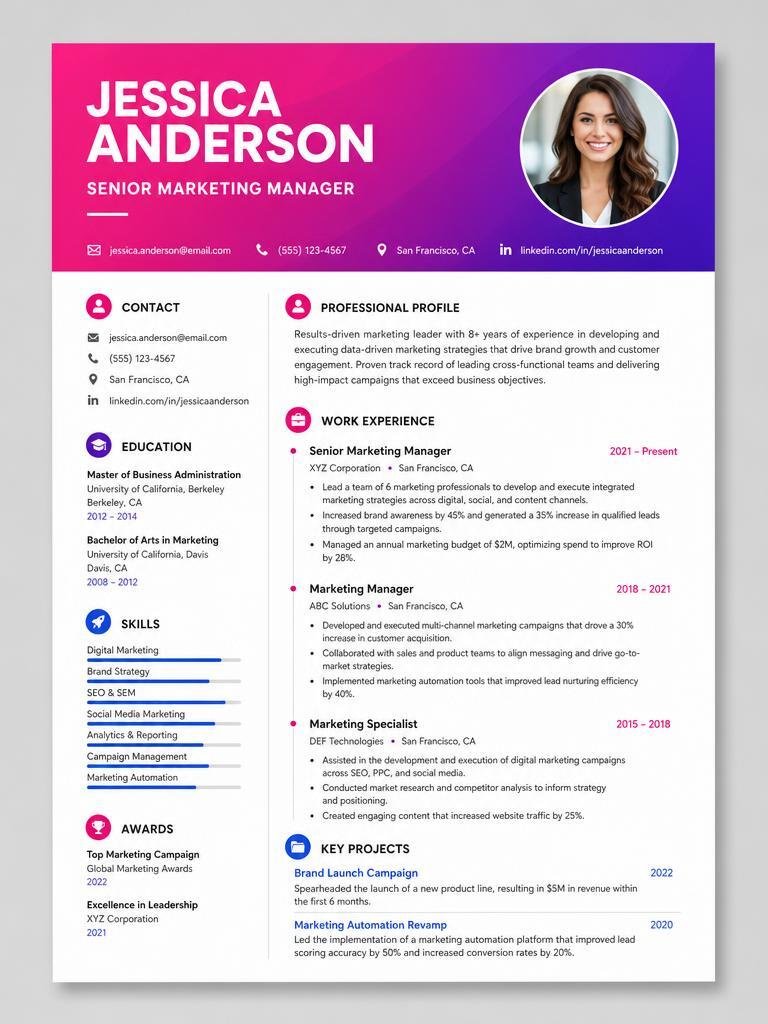
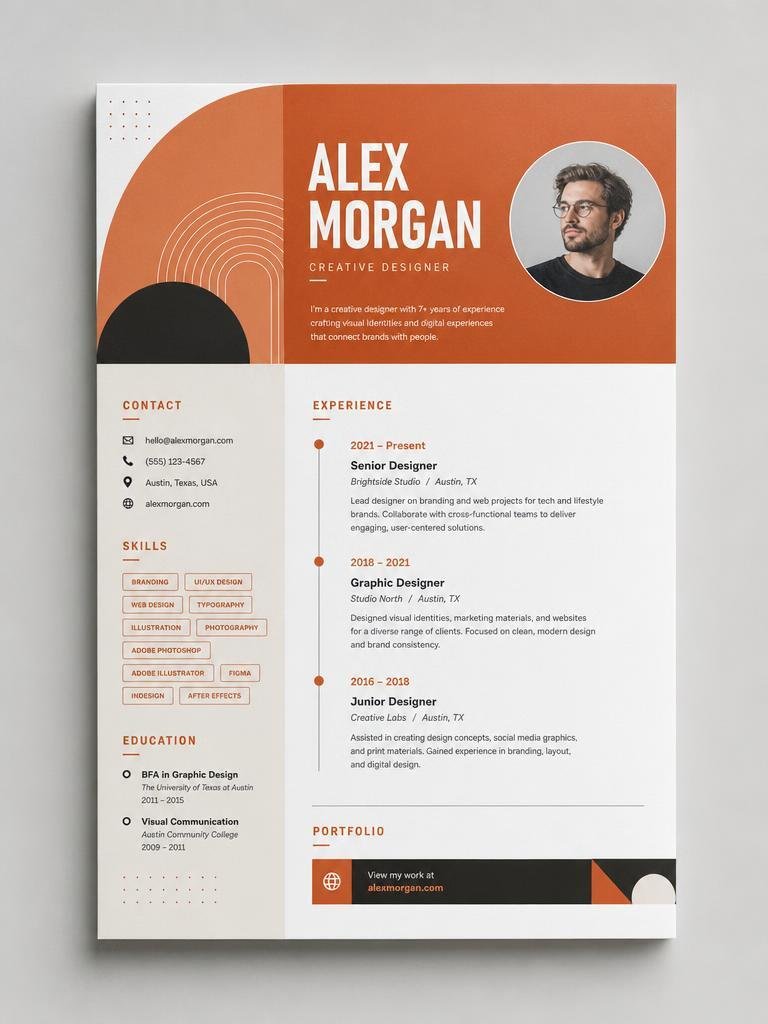
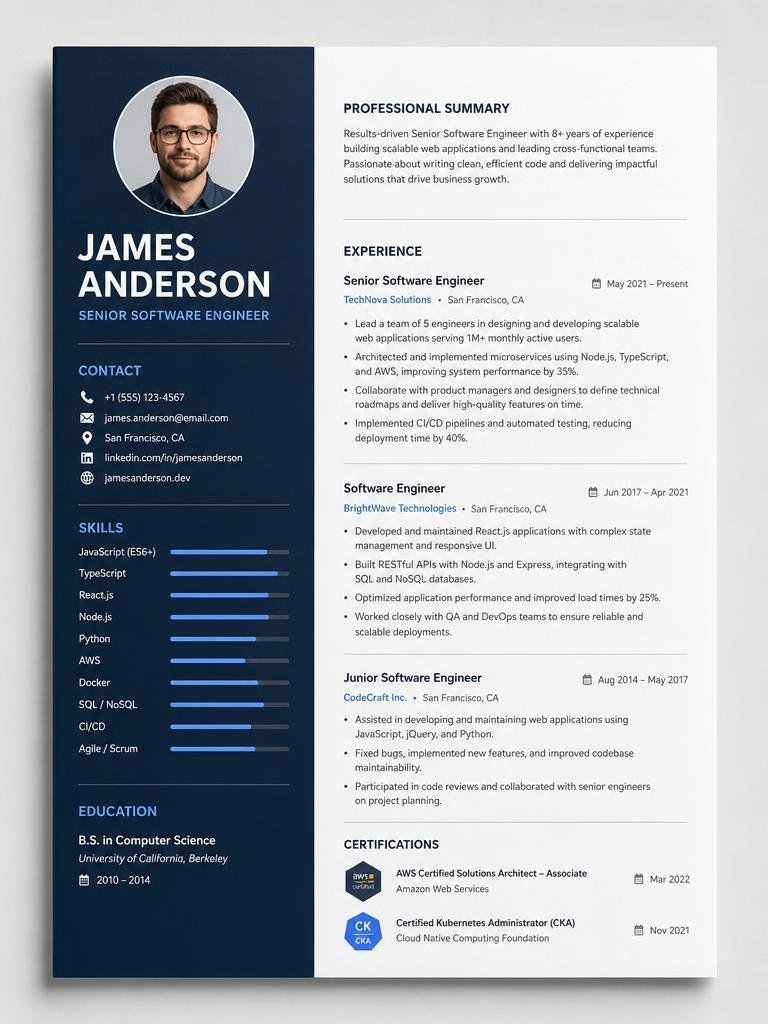
- A photo (unless applying for a role where appearance is relevant, such as acting)
- Your date of birth or age
- Your marital status
- Your full home address – city and postcode area are enough
The personal statement
This is the small paragraph at the top. It should be specific, not generic.
Weak: "Hard-working professional looking for a new opportunity."
Strong: "Digital marketer with five years' experience in SEO and paid social, growing organic traffic by 60% for e-commerce brands. Skilled in GA4, Google Ads and content strategy."
Writing your work experience
Use bullet points that show results, not just duties.
Before: "Responsible for social media." After: "Grew Instagram following by 40% in six months and increased engagement by 25% through a new content calendar."
Use numbers where you can. UK employers respond well to measurable results.
Education and skills
List your highest qualification first. If you are a graduate, the degree matters most. If you have many years of experience, education can be shorter.
For skills, mirror the words in the job description. If the post asks for "stakeholder management," use that exact phrase if it is true.
UK vs US spelling and terms
If you are applying in the UK, use UK English: "organise" not "organize", "programme" not "program" (for non-computing contexts), and "CV" not "resume". Small details like this signal that you have tailored your application.
UK CV checklist
- Two pages of A4 (or one for early career)
- Contact details, personal statement, experience, education, skills
- Reverse chronological order
- No photo, age or marital status
- Results-focused bullet points with numbers
- UK spelling throughout
- Proofread
AICVGenerators can format your CV for the UK market and tailor it to the job you are applying for, so you do not have to remember every rule.
Try it: Create your UK CV free →
Frequently asked questions
How long should a UK CV be?
Two pages of A4 is the standard for most roles. One page is fine for early-career candidates, and three pages is acceptable only for very senior or technical roles.
Should I put a photo on a UK CV?
Usually not. Photos are not expected in the UK unless the role makes appearance relevant, such as acting.
What sections should a UK CV have?
Contact details, a personal statement, work experience in reverse chronological order, education and skills. An interests section is optional and only worth including if it adds something relevant.
Should I include my date of birth or marital status on a UK CV?
No. Leave out your age, date of birth and marital status, and use only your city and postcode area instead of a full home address.
Should I use UK or US spelling on a UK CV?
Use UK English, such as "organise" instead of "organize", and call it a "CV" rather than a "resume". Small details like this show you have tailored your application.