AI Finance Resume Maker: Tailor Your CV for Banking & Finance Roles
An AI finance resume maker rewrites your existing CV so it matches a specific finance job description: the right keywords, the right emphasis and measurable results up front. It saves hours of editing, but it only works as well as the facts you give it, so you still need to check every number before you send it.
What an AI finance resume maker actually does
A good tool does three things for a finance candidate:
- Reads the job description and pulls out the skills, systems, qualifications and regulations the employer cares about.
- Rewrites your experience so the most relevant achievements come first, in the employer's language.
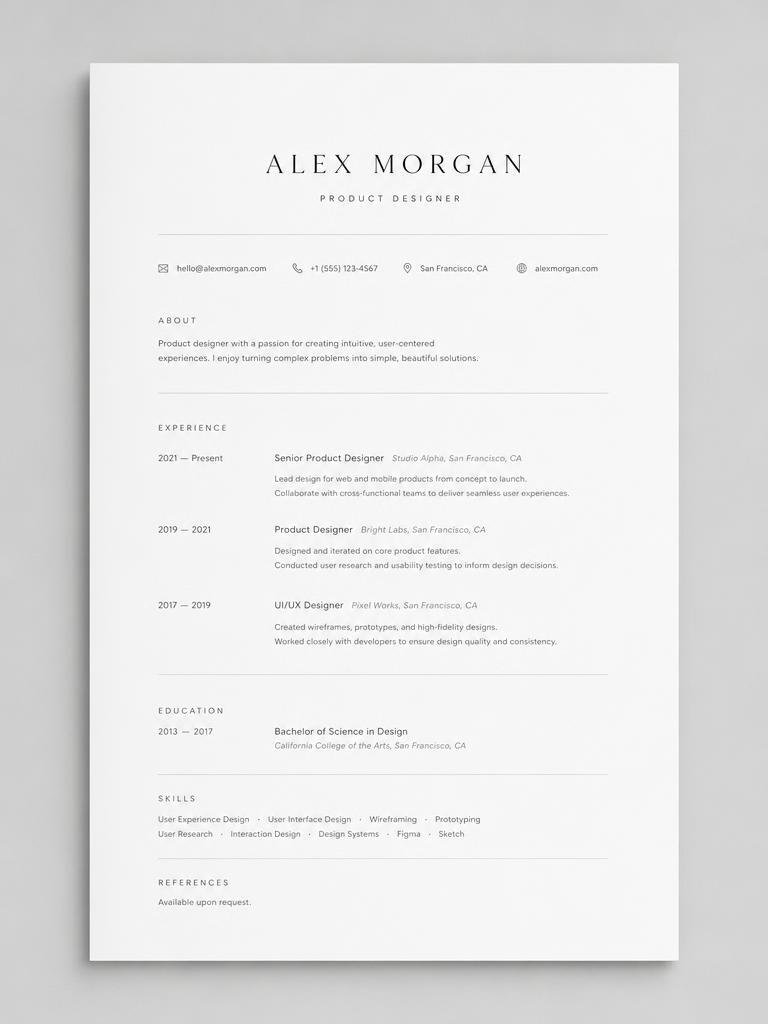
- Formats the result into a clean, single-column layout that applicant tracking systems (ATS) can parse.
What it cannot do is invent your track record. If your CV says you managed a portfolio but gives no size, the tool has nothing to quantify. The more concrete detail you start with, the stronger the draft.
Why finance CVs need a different approach
Finance recruiters screen for specifics. A generic "analytical, detail-oriented professional" tells them nothing, while "Reduced month-end close from 8 days to 5 across 4 entities" tells them exactly what you did.
Finance is also a field where credentials, regulation and systems act as hard filters. Many applications are screened first on whether you have the right qualification (CFA, ACCA, CPA, CIMA, FRM), the right software (Excel, SQL, SAP, Oracle, Bloomberg) and the right regulatory exposure. Your CV needs to make those visible in the first few seconds.
What to give the AI before you start
Collect this first and paste it in alongside the job description:
- Scale: portfolio, budget, revenue or transaction sizes, and the number of entities, clients or team members
- Outcomes: savings, growth, error reductions, audit findings closed, time saved
- Tools: the systems you genuinely use (for example Excel, Power BI, SAP, Tableau, Python)
- Credentials: full names, awarding bodies and dates, including levels passed for exams in progress
- Regulatory exposure: the frameworks you have worked under, such as IFRS, GAAP, Basel III, MiFID II or SOX
How to tailor your CV by finance role
The same career can be presented very differently depending on the job. Use this as a guide to what to put first:
| Role type | Lead with | Typical keywords |
|---|---|---|
| Investment banking and M&A | Deal experience, valuation and modelling | DCF, LBO, comps, pitchbooks, due diligence |
| Accounting and audit | Qualifications, close process, audit results | IFRS, GAAP, reconciliation, internal controls, month-end close |
| FP&A and corporate finance | Forecasting accuracy and business partnering | Budgeting, variance analysis, forecasting, Power BI, SQL |
| Risk and compliance | Regulatory frameworks and control improvements | Basel III, KYC, AML, stress testing, model validation |
| Wealth and asset management | Assets under management and client outcomes | Portfolio construction, client onboarding, performance reporting |
Before and after: finance bullets
The biggest improvement an AI tool can make is turning duties into results.
Before: "Responsible for monthly financial reporting."
After: "Produced monthly management accounts for a 4-entity group, cutting reporting time from 8 days to 5 through a standardised close checklist."
Before: "Worked on budgeting and forecasting."
After: "Built a rolling 12-month forecast in Excel and Power BI that improved quarterly forecast accuracy by 6 percentage points."
Before: "Helped with audits."
After: "Supported statutory and internal audits across 3 business units, closing 14 of 15 findings within the agreed deadline."
Treat the numbers above as a pattern, not something to copy. Use only figures you can defend in an interview.
A strong finance summary
Put two or three lines at the top. A simple structure works well:
"ACCA-qualified financial analyst with 6 years' experience in FP&A for retail and e-commerce groups. Skilled in forecasting, variance analysis and Power BI, with a track record of improving forecast accuracy and shortening reporting cycles."
Replace the profession, years, sector and strengths with your own, and mirror the language of the role you are applying for. For more formats, see our CV summary examples.
Mistakes to avoid with AI-written finance CVs
- Accepting inflated numbers. If the AI turns "supported" into "led" or adds a percentage you never gave it, correct it. Finance interviewers will probe the details.
- Breaking confidentiality. Do not name clients, deal counterparties or unreleased figures. Describe deals by size and sector instead, for example "a mid-market technology acquisition".
- Keyword stuffing. Listing every system and regulation you have ever heard of reads badly and does not help you pass screening. Keep it to what you can discuss.
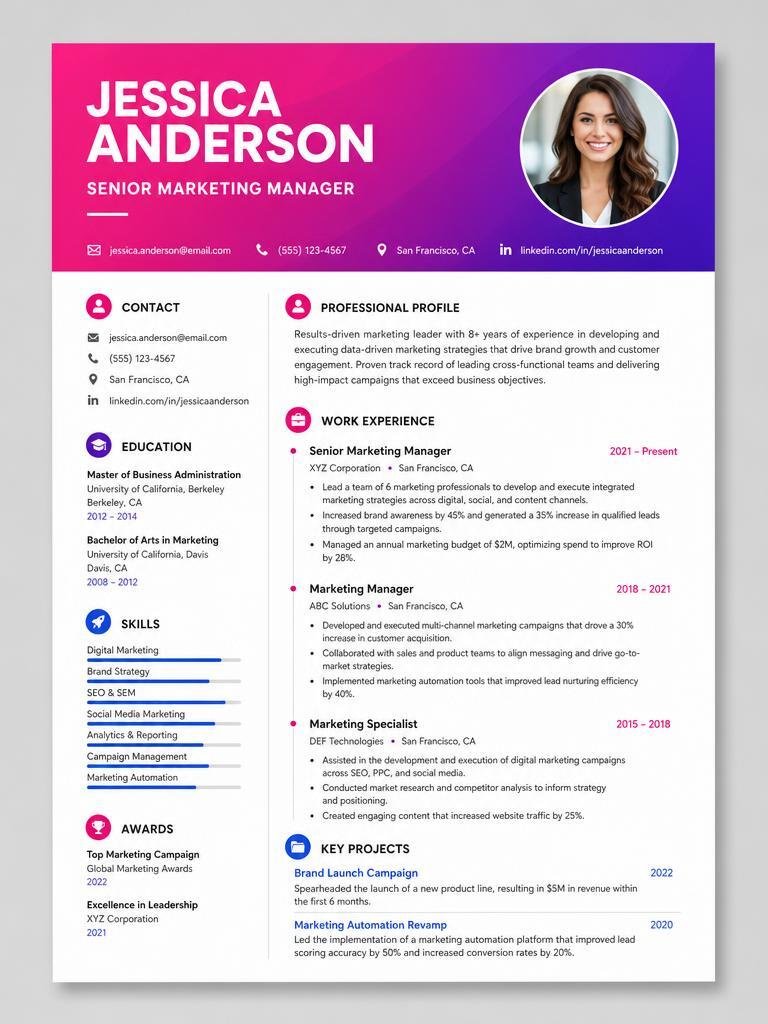
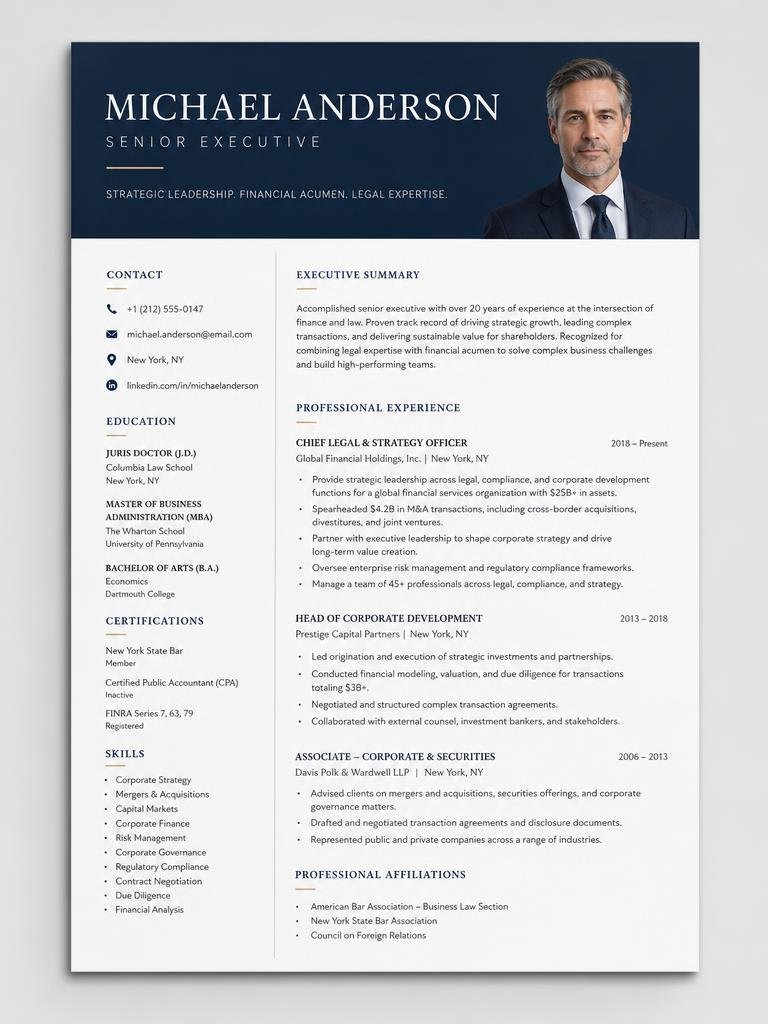
- Over-designing. Finance is a conservative field. A clean one- or two-page layout beats graphics and skill bars. Our guide to ATS-friendly CVs covers the formatting rules in detail.
- Skipping the proofread. One wrong number or misspelt standard undermines a CV that is meant to prove precision.
A quick checklist before you apply
- Qualifications and professional memberships are visible near the top
- Every role has at least two bullets with a measurable result
- Systems and regulations match the job description wording
- Numbers are accurate, defensible and free of confidential details
- The CV is one page if you are early career and two pages at most otherwise (see how long a CV should be)
Build your finance CV with AICVGenerators
Paste your current CV and the finance job description into AICVGenerators and you get a tailored, ATS-friendly draft in seconds. Then check every figure, add the details only you know, and send it. You can also read our Finance & Banking CV guide for sector-specific skills and examples.
Try it: Generate your tailored finance CV free →
Frequently asked questions
Can AI write a good finance CV?
Yes, as a first draft. AI is good at matching your wording to a job description and tightening bullet points, but it depends on the facts you provide. You must check all figures, titles and qualifications before sending it.
Will an AI-written finance CV pass ATS screening?
It can, if it uses a simple single-column layout, standard headings and the keywords from the job description. No tool can guarantee a pass, because each employer configures its screening differently.
What should I include on a banking or finance CV?
Include professional qualifications, systems you use, the scale of what you managed (portfolio, budget or transaction size) and measurable results. Add regulatory frameworks only where you have genuine experience.
How long should a finance CV be?
One page is usually right for early-career candidates, and two pages is the maximum for most others. Senior candidates with extensive deal experience may need a little more, but every line should earn its place.
How do I show deal or project experience without breaking confidentiality?
Describe the deal type, approximate size, sector and your role without naming the client or counterparty. For example, "advised on a mid-market technology acquisition" is both safe and specific.